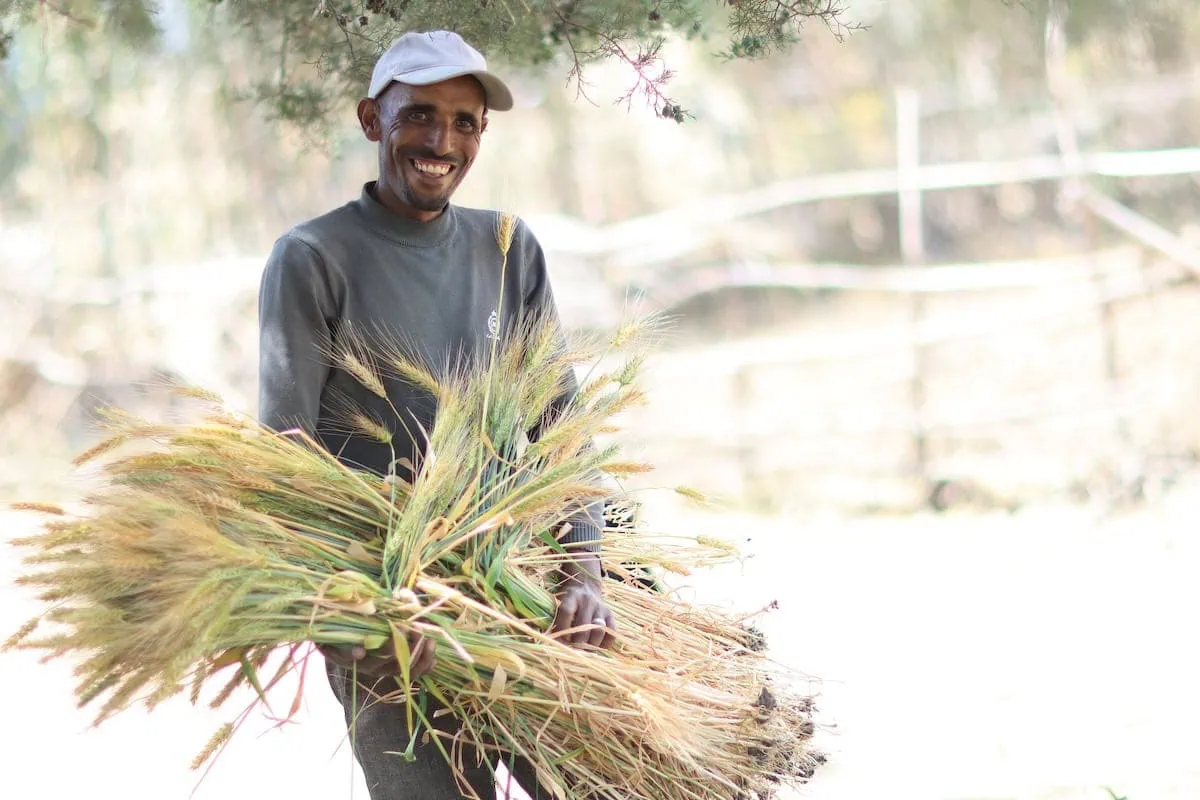
Asirat Abera, a 43-year-old dairy farmer from Chole Kebele in Aleltu District, has been farming for over a decade. In 2024, his life changed dramatically when he lost his wife during childbirth. Left to care for their five children alone, the youngest just five years old, Asirat became both father and mother, farmer and provider, trying to hold together a household that depended entirely on the small income from his four dairy cows; one local and three cross-breed with less than 50% of exotic blood level.
At the time, his dairy production was modest. His cows gave between 6-10 litres of milk per day, but poor feeding and the absence of chilling facilities meant that evening milk could not reach the market. Most of it was turned into butter and cheese for home use, while up to 15% went to waste due to spoilage. Without access to reliable markets or cooperative support, he relied on local milk traders who offered low prices and delayed payments. His monthly income averaged around 22,600 birr per month from approximately 824 liters of milk, with an average market price of 27.46 birr per liter. Often, it wasn’t enough to cater to his household’s needs.
The Transformation
When the Oromia Dairy Farmers’ Bounty Project was introduced to his area in 2023, Asirat was identified to participate in the project initiatives. The project, implemented by Solidaridad with support from the World Bank’s BioCarbon Fund Initiative, provided practical training in cow signaling, lactation curve management, feed systems and cooperative development. Through this support, Asirat was able to improve the way he managed his cows and joined the Chaltu Dairy Cooperative, gaining access to stable markets, extension services and peer support.
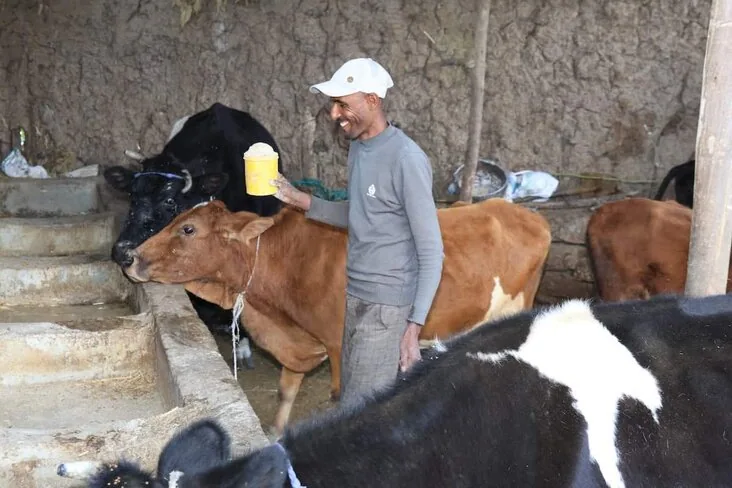
With new skills and guidance, he introduced better feeding practices. He planted oats and vetch on 0.125 hectares of land using small-scale irrigation, and began supplementing his cows’ diets with a concentrated feed blend available through the Aleltu Dairy Service Hub. His barn, once overcrowded and unhygienic, was upgraded with better drainage, water access and ventilation, creating a more comfortable and productive environment for his animals.
These changes helped his cows reach new levels of productivity. Today, he has seven dairy cows, including heifers, with three currently in milk. These cows produce between 13 and 25 litres per cow per day, and Asirat now delivers up to 50 litres of milk daily during the early phase of lactation, with almost no spoilage.
The installation of a solar-powered milk chiller at the hub solved a longstanding problem of night milk losses. Now, his milk is tested, cooled and stored safely before reaching buyers. With spoilage nearly eliminated and milk quality maintained, he earns better prices (77 Birr per litre) and receives more consistent payments through the cooperative. His monthly income has increased to 108,000 birr (590 euros), allowing him to cover his children’s school fees, meet household needs and invest in the farm.
“The new barn makes everything easier,” he says. “It’s not just about productivity, the cows are more comfortable, and it’s easier to keep everything clean.”
He also benefits from veterinary services, artificial insemination and feed on credit; all this is coordinated through the dairy hub. Payments for these services are deducted from his milk sales, which has eased financial pressure and improved his planning. For Asirat, this support system has been essential. Running the farm alone while also raising young children is still difficult. He handles all the work himself, from feeding and milking to cleaning and delivery. Manure management remains a challenge; without extra labor, this part of the job is especially hard. But the structure is in place, and his progress is visible.
Helping Asirat find a sense of purpose
Beyond income and productivity, dairy farming has restored a sense of stability for his family. His children have regular meals, attend school without interruption and enjoy a safer, calmer home environment. He is no longer forced to choose between daily survival and long-term planning.
“For the first time,” he says, “I don’t have to worry about how to pay for school or food. I can support my children with confidence.”
While he still works alone, Asirat’s vision for the future is growing. He hopes to expand his herd, further improve production and explore other farming ventures that can help build a more resilient livelihood. He encourages other farmers to stay committed, even when the path is difficult. “Do not lose hope. Work with others. Take the support that is offered. And invest in your children, it will always be worth it.”
Asirat’s story reflects the broader impact of the Oromia Dairy Farmers’ Bounty Project model: that with knowledge, infrastructure, and inclusive service delivery, smallholder farmers can improve not only their productivity but also their sense of security, dignity and possibility.